
Start dates
Fall (October), Winter (January), Spring (April), Summer (July)
Program length
18 months
Program Delivery
On-campus, Online*, Hybrid* (*based on program availability)
Specializations
Marketing Analytics, Operational Analytics, General Analytics
What is the Master of Data Analytics program?
Data analysis is one of the fastest emerging professions in Canada. With the Master of Data Analytics (MDA) degree, you’ll graduate ready to step into a high-demand career as a big data professional. This graduate Data Analytics program offers the skills and knowledge needed for success in today's data-driven world. Whether you're pursuing a master's degree in data analytics to advance your career or specialize further, this program equips you with the tools to thrive in a variety of industries.
Whether you prefer studying on campus or need the flexibility of fully online learning, the MDA program is designed to meet you where you are, without compromising academic quality or hands-on experience.

Specializations
Three program streams allow you to tailor your learning to suit your career ambitions and gain deeper problem-solving experience.

Marketing Analytics
Solve marketing-related problems in customer relationship management, product and pricing management, campaign performance and more.
Operations Analytics
Use analytics to improve quality and optimize processes in manufacturing, supply chain management, project management, tourism operations, and health care delivery.
General Analytics
Apply analytics to multi-disciplinary problems in government, non-profits, research, consulting and many other fields.
Study options
On-campus
Location
The Master of Data Analytics program is delivered in person at the University of Niagara Falls Canada campus in downtown Niagara Falls. Students participate in classroom-based instruction, hands-on analytics labs, and applied workshops. Any required specialized equipment, software, or lab access is provided by the university.
Schedule
MDA follows a structured weekly timetable. Using a flipped-classroom model, students review foundational material in advance and then use in-person time for analytics practice, technical demonstrations, case discussions, and guided problem-solving. Expect approximately two hours of in-person class time per course each week, supported by independent study and lab assignments.
Timeline
The program is designed for 18-month full-time completion across UNF’s four-term academic year. Students complete three study terms each year, with a one-term scheduled break. Students may take up to five years to complete the degree, if required.
Course content
On-campus MDA students gain direct training in data analysis, machine learning, visualization, and workflow automation using leading industry tools.
AI and analytics integration appear across several courses, including:
- CPSC 510 – Data Warehouse and Visualization: Students use Power BI, Tableau, and AI tools such as ChatGPT to automate insights, validate interpretations, and enhance data storytelling.
- CPSC 620 – Agile Software Development: Students apply AI-assisted coding, sprint planning, requirements documentation, and continuous integration testing to build AI-enhanced prototypes.
Students work with Python, SQL, Copilot, Google Cloud, AWS, and advanced BI platforms to complete hands-on applied work.
Participation
On-campus learning is highly interactive, blending labs, team-based analytics activities, and live faculty guidance. Students collaborate in small groups to solve real-world data challenges. Across MDA courses, assessments typically follow a 60/40 split between individual and group work.
Assessments
Students complete a mix of assignments including predictive modeling tasks, dashboard builds, coding exercises, case studies, presentations, and applied analytics reports. Select courses may include quizzes or exams, all of which are held in person. Assessment weights vary from five to 50 percent.
Capstone and applied learning
The program concludes with a nine-credit capstone project, where students work under faculty supervision to analyze real datasets, develop AI-supported analytical models, and present recommendations to stakeholders.
On-campus students may also engage with employers through guest lectures, project evaluations, and industry collaborations.
Learning environment
Students benefit from analytics labs, faculty mentorship, academic advising, and access to digital and cloud-based technologies used throughout the program.
Online
Location
This is a fully online program. You can complete your coursework from anywhere.
Schedule
There will be no scheduled classes. Asynchronous learning means you can study at your own pace. All course materials will be made available at the start of term, except for exams and quizzes.
Timeline
Weeks 1-10: You will be able to access your course content online and complete tasks throughout this period.
Weeks 11-12: You will need to complete any review activities and final assessments, including exams and final projects.
Course content
Each course will have a syllabus as well as additional course materials that will be made available at the start of the term, except for exams and quizzes.
Participation
While components vary depending on the individual course, you can expect to use discussion forums and group chat platforms, participate in videoconferences, as well as utilize project management tools. There will be group assignments in addition to individual assignments.
Course highlights
Year 1, Term 1
Year 1, Term 1 courses
Principles of Analytics
This course introduces data analytics, focusing on practical skills using relevant software. Students explore data types, collection, cleaning, statistical measurements, visualization, and probability theory for business decisions. Hypothesis testing, ANOVA, and Chi-Square tests are covered. Ethical considerations and real-world applications are integrated, culminating in a capstone project.
SQL Databases
SQL competency is the single most important skillset for a Data Analyst. This course provides a comprehensive introduction to the language of relational databases: Structured Query Language (SQL), focusing on the use of SQL for data analysis. Topics covered include: Entity-Relationship modeling, the Relational Model, the SQL language: data retrieval statements, data manipulation and data definition statements.
Python for Data Analysis
This course focuses on data analysis in Python. Students learn to manipulate data, perform statistical analysis, and create visualizations using Python and Python data tools like Jupyter, NumPy, and Pandas. The course also explores integrating Python code with other analytics tools such as Excel, Power BI, and Tableau.
Data Analytics Case Study 1
Apply data science, descriptive analytics, SQL, Excel, and relational database knowledge to a real-world marketing analytics problem (e.g., CRM, product management). Students formulate questions and hypotheses, prepare data, build models, and use visualizations to share insights, guided by a realistic scenario.

Year 1, Term 2
Year 1, Term 2 courses
Predictive Analytics
Building on DA500, this course covers machine learning problem framing and predictive modeling techniques like regression and forecasting. It introduces predictive analysis tools and applications in data mining and machine learning, showcasing real-world predictive data models in healthcare, consumer behavior, and credit risk analysis.
Data Warehousing and Visualization
This course provides an end-to-end hands-on data analytics experience using Microsoft’s Power BI business analytics service. The students learn to connect, import, and clean data from multiple sources, create data models, analysis to find insights, and to create visual reports, dashboards, as well as mobile apps for users.
Marketing Analytics
This case-study driven course introduces marketing analytics, exploring how organizations use data to support the 4 Ps of marketing: product, price, place, and promotion. It emphasizes practical employer needs in social media marketing, SEO, customer insights, campaign performance, pricing, category management, and sales effectiveness. Students develop a plan to acquire necessary skills for a marketing analytics career.
Data Analytics Case Study 2
Students apply machine learning, predictive analytics, SQL, Excel, and Power BI skills to a real-world operational decision problem (e.g., supply chain, quality control). In this course, they’ll formulate questions and hypotheses, prepare data, build and deploy models, and create visualizations to communicate insights.
Year 1, Term 3
Year 1, Term 3 courses
Prescriptive Analytics
An introduction to statistical optimization methods and tools for building decision support and automation models. Students explore and evaluate prescriptive analytics models in healthcare, finance, logistics, and other areas of interest. They also develop user-friendly decision support models using Excel, Python, and other tools.
Advanced Data Visualization
Students first explore a range of data visualization techniques published by the worldwide Tableau community on Tableau Public. They then acquire end-to-end experience using Tableau Desktop to extract, clean, explore, and analyze data from different sources, and share insights using visuals, maps, reports, and Business Intelligence dashboards. Students can further explore how different industries use Tableau as part of their business intelligence solution.
Operations Analytics
This case-study driven course introduces operations analytics, exploring how organizations use data to reduce costs, improve efficiency, and enhance customer experience. It emphasizes employer needs in supply chain planning, resource scheduling, process optimization, quality control, strategy execution, and project management. Students develop a plan to gain necessary skills for an operations analytics career.
Data Analytics Case Study 3
Apply machine learning, prescriptive analytics, Python, and Tableau skills to a complex, real-world decision problem. Students formulate questions and hypotheses, prepare data, build and deploy models, and create Tableau visualizations to communicate insights effectively.
Year 2, Term 1
Year 2, Term 1 courses
Agile Software Development
This course introduces agile software development practices to big data analytics. Agile emphasizes collaborative, cross-functional teams, adaptive planning, evolutionary development, early delivery, and continuous improvement. It's the leading methodology in today's data analytics field, fostering flexible responses to change and evolving requirements.
Choose two of the below courses
Advanced Analytics Internship
Advanced Analytics Internship develops consulting skills and provides the student the opportunity to gain analytics qualifications in their chosen specialty: Marketing Analytics, Operations Analytics or General Analytics. A learning contract governs the obligations of the instructor and the student in this self-directed learning experience.
or
Advanced Data Analytics
This course covers advanced data analytics techniques, including data mining, NLP, and pattern discovery. Students apply these methods to marketing and operations analytics, exploring sentiment analysis, recommendation systems, and AI-driven process control through hands-on projects using advanced Python libraries.erience.
and
Machine Learning
This course integrates machine learning theory with hands-on applications, covering data preprocessing, algorithms, neural networks, and model evaluation. Students gain practical experience with Python, preparing for industry and research roles in data analysis.
Year 2, Term 2
Year 2, Term 2 course
Capstone Project
Presented with a specific scenario, students will identify an area of focus to investigate thoroughly. They must identify the problem, collect and analyze relevant data, and provide recommendations based on their findings. The project necessitates utilizing techniques covered in previous terms and applying statistical software tools learned in prior courses.
Students will consult regularly with capstone faculty to develop a study proposal, conduct their research, and produce a comprehensive final report. They will have to present their data findings and submit the dataset collected during their project.
These course highlights provide a glimpse into the Master of Data Analytics program. Your actual schedule may vary. There is a scheduled program break between Year 1, Term 3 and Year 2, Term 1. For full course descriptions and schedules, consult the Academic Calendar.
Admission requirements for the Master of Data Analytics

Academic information
Applicants must meet the following minimum conditions for admission:
- Bachelor’s degree – Completion of a four-year honours degree standard with CGPA of 3.0 (on 4.33 scale) or better
- Completed at least two undergraduate courses in statistics or quantitative methods
Document checklist
Applicants must submit:
- A completed application form
- Official transcripts from all post- secondary institutions attended
- Official documentation confirming professional designations, where applicable
- Proof of English language proficiency, if applicable
International information
Applicants who completed undergraduate studies outside Canada must also submit:
- Certified translations of any documents not in English
- Documentation confirming award of their previous degree(s), if not already indicated on official transcripts
- A credential evaluation from a recognized service, if required by the registrar
Tuition information
Choosing to pursue a university education is a big commitment that impacts every aspect of your life – including your finances. Our fees are determined by the total cost of individual credits per academic year. All fees are listed in Canadian dollars and these rates are subject to change.


$24,000
Domestic tuition

$48,000
International tuition
Financial Aid and Scholarships
Financial aid options
UNF has partnered with organizations to help newly admitted domestic students finance their education.
Awards and scholarships
The Office of the Registrar had dedicated more than $15 million in scholarships, awards and financial support to students in 2026. Entrance Awards are for newly admitted international and domestic students, while Academic Scholarships are for those entering the second term of their program.

$15 Million
Scholarship & awards
Hear from our Associate Dean
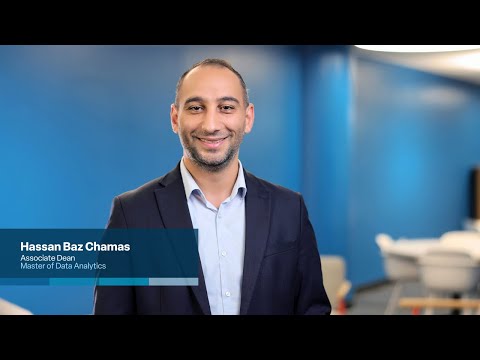
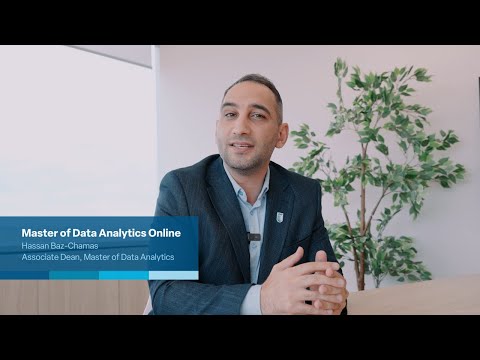

Data analytics is one of the most sought-after fields in Canada’s top industries. The theoretical foundation and practical hands-on industry experience this program provides will give you skills that are highly valued in today’s job market.

Career highlights
The MDA program provides core training in the data science lifecycle and opens the doors to a diverse range of opportunities for those pursuing a career in data analytics.

Finance

Business Intelligence

Technology and Innovation

Healthcare
Career paths after graduating with a Master of Data Analytics
As businesses increasingly turn to machine learning to analyze vast amounts of data, the demand for skilled data analysts who can work with these algorithms is growing.
According to Canada’s Job Bank, there will be a shortage of data analysts across Canada through 2029 – especially in Ontario. This is a global trend, as the US Bureau of Labour statistics predict the rise of Data Science will create roughly 11.5 million job openings by 2026 and a report by IBM estimated that by 2025, there will be more than 2.7 million job postings for data analysts and data scientists in the US alone.
Career path and salary
- Big data specialist - $122,100
- Data manager - $136,257
- Business analyst - $130,617
- Data visualization specialist - $110,000
- Customer intelligence analyst - $96,827
*Source, Talent.com

Student Testimonials


Frequently asked questions
On-campus
Do I need a mathematics background for this program?
Students entering the MDA program should have a background in business management, math or computer information systems and have completed at least two undergraduate courses in statistics or quantitative methods. Email our Student Recruitment Advisors at inquiry@unfc.ca for more information.
Are there specializations in this program?
Yes! You can tailor the program to suit your desired career outcomes through one of three learning tracks: Marketing Analytics, Operations Analytics, or General Analytics.
Will I gain practical experience?
There are several opportunities for you to gain practical experience through this program, including internships, work-integrated learning opportunities and capstone research projects. Attend one of our graduate program webinars to learn more directly from faculty members. Visit our events page to find the date for our next webinar.
Do I need to take the GRE?
We do not use standardized testing as part of the admission process for our graduate degrees. We look at your academic record from your undergraduate studies during the application process. See our admissions page for more information about our requirements.
Does a master's in data analytics require coding?
Yes, the Master of Data Analytics program does require coding, though no prior knowledge is required as students will be taught the basics through their courses. As per the program’s admission requirements, students must have finished a quantitative course before joining the MDA program.
Is there an internship component?
Yes, you have the option of completing an Advanced Analytics Internship in the first term of your second year. Depending on your stream, your internship can be focused on marketing analytics, general analytics, or general analytics.
Online
Are there any pre-requisites needed for this program?
Applicants for the Master of Data Analytics program need to have completed at least two undergraduate courses in statistics and/or quantitative methods (or equivalent).
Can I complete an internship as an online student in the Master of Data Analytics program
Yes, there is an optional Advanced Analytics Internship in the first term of your second year. This is available to both on-campus and online students.
Are career services available to students in the Master of Data Analytics online program?
Yes, there is a wide range of career services offered to all UNF students, whether they study online or in-person. Visit the Career Services page for more information on services available, including career advising, one-to-one appointments, and a virtual Career Readiness Workshop series.
Will I have to come to campus?
This program is fully online. You will not have to attend our downtown Niagara Falls campus. Projects will be completed online, and you will be able to connect one-on-one with your professor virtually on a regular basis.
Will my classes be delivered on a schedule?
Our online program is delivered asynchronously, allowing you to access your coursework on-demand in a way that best suits your schedule and lifestyle.
Is faculty interaction the same in the online and on-campus versions?
Our online students have plenty of opportunities to interact with faculty, even though they’re not in the same physical environment. This includes regular online office hours.
Talk to a Student Advisor
This institution has been granted a consent by the Minister of Colleges and Universities to offer this program for a five-year term starting Oct. 14, 2022. Prospective students are responsible for satisfying themselves that the program and the degree will be appropriate to their needs (e.g., acceptable to potential employers, professional licensing bodies or other educational institutions.)
